.jpg)
The focus around "attached or attachment parenting" (AP) has been sex orientated recently. Firstly The New York Times published this "piece" (and really, that's code for drivel), closely followed by this offering from Jill Filipovic for Feministe (a feminist blog) by The Guardian.
Whilst I'm sure we could dwell a while discussing possible motivation of these papers or their selection of writers (a bloke who quite rightly was summed up by Jill as "sounds like a total dick", and a 20 something feminist lawyer) - especially given The Guardian have writers such as Annalisa Barbieri on their team, who write with experience and substance on such topics, let's move along.
Jill deftly attacks James' clearly sexist attitude, whilst still getting a dig at attached parenting - just not for the reasons James gives.
"It would have been nice to see a decent take on the impact that attachment parenting can have on a marriage when it becomes a barrier to intimacy, or an article about how attachment parenting very much feeds into traditional ideals about women existing to serve and sacrifice for their children, or a piece on how sharing a bed with a kid until the kid is in third grade really puts the kabosh on sexytimes."and
"Breastfeeding for five years can be a real issue; denying that isn't particularly helpful".and
"There are certainly lots of good criticisms to be made about attachment parenting"And Jill has AP'd how many children exactly?
So let's actually start with what AP is and isn't about. Whilst I'm sure it's super handy for some to believe there are neat little rows of parenting labels "attached parenting", "detached parenting" and so on. This simply isn't the case - not all parents who considered themselves attached bed share or breastfeed, so it hardly seems fair the AP banner seems to be a "catch all" ie a stereotype. Instead AP is simply a basic foundation of ethics which can and is interpreted differently by each and every family. Jill herself acknowledges this to some degree, before saying:
"But the whole philosophy was spelled out by a rightwing misogynist who saw women's "natural" roles as mothers and servers of children; his view, basically, was that women should sacrifice everything for their kids and centre their entire worlds around those kids, because that's what good women do. In my view, that's not particularly good for women or for kids (have you met adults who grew up believing they were the centre of the entire universe? They are not pleasant or well-adjusted people)."But this isn't strictly true....

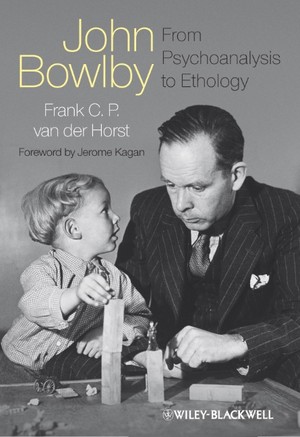 Attachment theory is the joint work of John Bowlby and Mary Ainsworth (Ainsworth & Bowlby, 1991 ). Drawing on concepts from ethology, cybernetics, information processing, developmental psychology, and psychoanalysts, John Bowlby formulated the basic tenets of the theory.
 He thereby revolutionized our thinking about a child’s tie to the mother and its disruption through separation, deprivation, and bereavement. Mary Ainsworth’s innovative methodology not only made it possible to test some of Bowlby’s ideas empirically hut also helped expand the theory itself and is responsible for some of the new directions it is now taking. Ainsworth contributed the concept of the attachment figure as a secure base from which an infant can explore the world. In addition, she formulated the concept of maternal sensitivity to infant signals and its role in the development of infant-mother attachment patterns."
About Bowlby personally:
"After graduating from the University of Cambridge in 1928, where he received rigorous scientific training and some instruction in what is now called developmental psychology, Bowlby performed volunteer work at a school for maladjusted children while reconsidering his career goals. His experiences with two children at the school set his professional life on course. One as a very isolated, remote, affectionless teenager who had been expelled from his previous school for theft and had had no stable mother figure. The second child was an anxious boy of 7 or 8 who trailed Bowlby around and who was known as his shadow (Ainsworth, 1974). Persuaded by this experience of the effects of early family relationships on personality development, Bowlby decided to embark on a career as a child psychiatrist (Senn, 1977h) Concurrently with his studies in medicine and psychiatry, Bowlby undertook training at the British Psychoanalytic Institute."What's also interesting is that Mary Ainsworth was in her time considered somewhat of a feminist - she enrolled at the University of Toronto in 1929 and was only one of four to complete an honors degree in psychology. After completing a PHD and serving in the American corps, Mary returned to the University of Toronto as assistant professor and taught introductory psychology, experimental psychology, and personality assessment. After meeting her husband Mary moved to London and secured a research position at the Tavistock Clinic under John Bowlby. After a stint and a study in Uganda, they moved to Maryland and Johns Hopkins offered Ainsworth work as a lecturer. But it wasn't plain sailing:
"Ainswirth did face salary discrimination during her first years at Johns Hopkins, receiving less money than her male colleagues. She was responsible for integrating the John Hopkins Club, where the male faculty lunched in the main dining room, while the females ate in a smaller, separate one. One day, she dressed in her best, pinned on a corsage, and took a table in the middle of the male-only room and waited until she was eventually served." here

Of the relationship of her research to the women's movement, Mary Ainsworth acknowledged that her work might be interpreted as a dictate to mothers to stay home with their children during the early years. And while she emphasized the importance of a secure attachment between infant and caregiver, and that full-time mothering may be the usual way of ensuring a secure attachment, she did not deny that alternative arrangements were possible. She said, "Had I myself had the children for whom I vainly longed, I like to believe I could have arrived at some satisfactory combination of mothering and a career, but I do not believe that there is any universal, easy, ready-made solution to the problem" (Ainsworth, 1983, p. 216).So this wasn't merely one unqualified woman hater tossing around a few random ideas. Anyone interested in AP may enjoy THE ORIGINS OF ATTACHMENT THEORY: JOHN BOWLBY AND MARY AINSWORTH here
Furthermore there is ample evidence should anyone care to delve, that shows children who have their needs responded to when small actually grow up to be more secure, independent, empathic etc. Are these traits you typically associate with self centered people? Let's be clear there is a distinct difference in responsive and permissive, buying little Jimmy everything they want and never saying no is not AP.
Don't the numerous cultures who practice AP as standard demonstrate the above is clearly bluster? Mongolia is just one example.
I absolutely don't think AP is at all about "women existing to serve and sacrifice for their children" - otherwise how come some parents work outside the home? How come in some families it's the dad/partner who does the attached parenting?
In fact one of the principles as outlined by Attached Parenting International is:
"Strive for Balance in Personal and Family Life - it is easier to be emotionally responsive when you feel in balance. Create a support network, set realistic goals, put people before things, and don't be afraid to say "no". Recognize individual needs within the family and meet them to the greatest extent possible without compromising your physical and emotional health. Be creative, have fun with parenting, and take time to care for yourself."
.
Consider for a moment that a mum who chooses to stay at home with her children might feel the only thing she has sacrificed is perhaps a job she may not have actually liked that much anyway! That by being responsive to their child's needs as a couple, doesn't in turn automatically means their needs or those of their partner are not met (in fact the opposite may be true). Even if the mother does consider her parenting style a sacrifice, isn't that her choice if she feels the payoff is worth it?
As Charlene noted on Facebook:
"It's ok to make sacrifices for career goals...live apart for a job, work and go to school...or for a nation's goals...be deployed and you're a hero...but make sacrifices for a few years for your children and woah nelly, we can't have that. Why is it that traditionally feminine things are still looked down upon? How is it equal rights if we have to change our life choices to the ones they attribute with value in order to be seen as worthy?"I also wonder how often AP is a barrier to intimacy as Jill suggests. If only one parent is on board with any parenting style, this in itself may cause a barrier between parents, I've heard this being the case for couples where dad wants to leave baby to cry it out and the mum feels this is instinctively wrong. But do we really not think "detached parents" don't have differing opinions too?
If both parents share the same principles around raising children, and can listen and acknowledge their child's needs, does it make sense they then ignore each others?
As another Facebook reader said:
"We AP big time, but we also have a very attached marriage, and this article is very far from reality. =P My husband and I have been an "every day" couple from the beginning and that won't be changing anytime soon. ;)"Something else rarely mentioned is that breastfeeding bedsharing mums often get more sleep and of a better quality ie they are more well rested. From my own experience this is certainly true - with number one, several night wanderings to the "nursery" plus time spent then trying to get baby to settle alone, meant the only thing I was interested in on hitting the sheets was sleep - and pretty please let it be for more than 1 1/2 hours!
Several mums commented that breastfeeding gives them a super quick easy way to get their baby back to sleep in the evenings, also freeing up more "couple time". Those that had followed a more detached parenting style with some babies, but used more attached techniques with others - all commented that the latter was so convenient, easy and ultimately less time consuming that again more "sexy time" was on the cards.
And seriously, is having a toddler in the bed really likely to be a barrier to sex if two people want it? Lordy I'm gagging but darn the toddlers in the bed, that's that then...With that knowledge we should be able to eradicate teen pregnancy by banning the bedroom right?
Or sigh who has the energy when they've been looking after children, breastfeeding and APing all day, I was so much more up for it when I was making up 10 bottles per day according to DOH guidelines, sterilising them, doing a nursery run before commuting to my high powered full time job, right before coming home and sleep training the baby...
For real?
I'm sure lots of AP couples have less sex than one or the other would like, but I'm equally sure that's the case for couples with an opposing parenting style. One mum raised a good point on Facebook:
"I do actually wonder if these men aren't "Getting enough" because they are general arses rather than their wife's breastfeeding habits You have to feel an attraction to someone mentally and physically to want to have sex with them"And perhaps for men not getting it, blaming the parenting style might seem logical and convenient - rather than considering other possibilities.
A dad on Facebook summed up the first article well
"I would suggest that, because he may not want to look too closely at other aspects of his relationship, he may be oversimplifying things down to this one issue."Or perhaps a bit more bluntly by this mum:
"Sounds like he needs to up his game and learn the art of seduction... Being a twat is a major turn off to most women, including breastfeeding women"Another added:
"The problem he described was not that his wife didn't want to have sex with him, or that he wasn't allowed to touch her breasts, it was that the sight of her breastfeeding made him physically ill. Sounds like he needs professional help. He's the one causing the marriage to be sexless."And surely no self respecting feminist would suggest a woman sacrifices something so significant to her own health because it turns a man off? (well this particular "man" anyway!) Burn your bra's but heaven forbid a man can't find his wife erotic if she also uses that breast to feed a baby. Back to the seemingly "single function" of breasts.
Another mum tackled Jill's comment of "Breastfeeding for five years can be a real issue; denying that isn't particularly helpful." head on:
"for whom the issue??What's also fascinating is that nearly one in four American couples sleep in separate bedrooms or beds, the National Sleep Foundation reported in a 2005 survey. Recent studies in England and Japan have found similar results. And the National Association of Home Builders says it expects 60 percent of custom homes to have dual master bedrooms by 2015.
where are these miserable husbands??
'oh no, we hate doing sex on the couch/kitchen counter/stairs/in the shower/spare room/living
room rug in front of the fire!' I hear them cry
'it's so terrible for me to see that my child is secure, nourished and healthy, and I hate watching those loving snuggles!' they moan
'and knowing that my wife's risks of cancer are reduced every day she continues makes me so sad!'
oh? there are none of these?
well that may be because we try to marry the sane fellas. The mad ones are all out there holding their wife back from comforting their crying offspring."

Better quality sleep and "keeping the marriage fresh and frisky" are just two reasons cited here and here - nothing to do with children. Yet throw children into the mix and mention your husband heads off to a separate space whilst you sleep with the toddler, and most are gasping, breaking out in a cold sweat and offering marriage guidance.
So is AP code for neglected relationships in favour of the children? I will let Facebook fans again sum up:
"Hmm... well I co-slept with all of them... including twins and... let's put it this way... I have five children!"
"I think it has spiced up our sex life. We have to be more creative. Like I saw on a t-shirt once, "Co-sleepers get dirty... in the garden." Lol "
"I always wonder do these people not have sofas? or, a la postman always rings twice, kitchen tables? ;-D"
"Do these people not have any imagination? DH and I have not slept in the same bed for the last 13 years. He got kicked out after baby no 4, because he snores and no one got any sleep. We have managed another five babies since then, def hasn't caused us any issues ;-)"
"Being too tired to do the deed with a small person to take care of is a FAR bigger reason for less frequent nooky than co-sleeping could ever be. If you both WANT to get amorous, you will find a location to do it. If one of you doesn't, you will find an excuse - and 'the bed is occupied' is an excuse - not a reason "
"This article is complete balls. Sexless marriage? Really? Are any of us co-sleeping, breastfeeding, AP mothers in a sexless relationship because of our parenting choices? REALLY? Utterly ridiculous."
"Erm I've been bfing for 6 years continuously and am pg with my 4th child (3rd pg since I started bfing) so I really don't think 5ys of bfing causes a sexless marriage and neither would my husband!!"
"Clearly this author has no idea that AP practices are how millions of people have parented from before we came down from the trees."
Further reading: http://www.childwelfare.gov/pubs/issue_briefs/brain_development/