"When women are reduced to their physical appearances, all the things that make them beautiful on the inside, like kindness and intelligence, come to seem less important. They waste time and energy perfecting their appearances that could be spent developing their careers, bonding with their loved ones, and making the world a better place."Last week I heard the devastating news a local mum had tragically died undergoing Brazilian Butt Lift (BBL) surgery in Turkey. Leah Cambridge felt body-conscious after having three smalls and the foreign clinic seemingly offered an attractive alternative to the the UK.
The BBL procedure takes fat from elsewhere (such as your stomach, via liposuction), before it is re-injected into your butt. Whilst the procedure seems to be marketed as safer than implants or fillers, there's still a risk of the injected product ending up somewhere it shouldn't - for example your heart or lungs:
“If somebody injects fat into the wrong place and goes deep into the muscle, then the chances of the patient getting muscle necrosis – muscle death – and fat going into the vascular system (which you can die from) are increased."The Plastic Surgery Group in London reports that, during the second half of 2016, they saw a staggering 500 PER CENT increase in consultations for the BBL.
The cosmetic surgery and procedure market size was valued at over $26.3 US billion in 2016 and is expected to reach $43.9 US billion by 2025, according to a new report by Grand View Research, Inc.
The photographs and clips published of Leah, show a young (29), vibrant, beautiful, engaging mother with an already model-like figure and a contagious laugh. We learn about her long-term relationship with a man she planned to marry, how they were building a business and a future as a family. In the blink of an eye her family are now planning a funeral and three children are left without a mother.
The news coverage highlighted how other young, glamorous celebrities have also used the clinic - leaving many asking why.
Why are so many young women who seemingly have it all, tempted to risk going under the knife for the perfect butt, boobs or nose?
"The substantial increase in the volume of cosmetic procedures can be attributed to the popularity of digital photography, rising demand by consumers to boost self-esteem, introduction of self-monitoring apps, and increasing affordability of cosmetic surgeries in developing countries."Dr Jack Duckett Senior Consumer Lifestyles Analyst at Mintel studies surgery trends in the UK:
“Our research shows that women are much more likely to be unhappy with areas of their appearance than men, reflecting the high level of pressure many women feel to look a certain way” says Jack.A recurrent theme reading around the topic is pressure to look a certain way, objectification (treating a person as an object or thing) and sexualisation (when a person's value comes only from her or his sexual appeal or behaviour, to the exclusion of other characteristics, and when a person is portrayed purely as a sex object) result in low self-esteem.
“Much of this pressure comes from the advertising industry, with the continued emphasis on photoshopped models promoting unachievable aesthetic goals. But there can be no doubt that social media is also playing an important role in exacerbating many women’s self-image doubts.”
Advertising, "Photoshopping" and now social media - whether you have a girl, boy, nieces, cousins, sisters - we all need to be aware of what's happening around us.
Reports show a trend for these pressures to now start at a disturbingly young age.
In 2010 the Home Secretary commissioned an independent report:
“How have sex, sexiness and sexualisation gained such favour in recent years as to be the measure by which women’s and girls’ worth is judged?
While it is not a new phenomenon by any means, there is something different about the way it occurs today and how it impacts on younger and younger girls.”
The evidence collected in this report suggests these developments are having a profound impact, particularly on girls and young women."
As children grow older, exposure to this imagery leads to body surveillance, or the constant monitoring of personal appearance. This monitoring can result in body dissatisfaction, a recognised risk factor for poor self-esteem, depression and eating disorders.6
Indeed, there is a significant amount of evidence that attests to the negative effects of sexualisation on young people in terms of mental and physical health, attitudes and beliefs.7"
If you haven't seen it - this presentation from a high school student is a good introduction to sexualisation many may not even be aware of.
The early sexualisation of girls has become such a concern, in 2014 a task force from the American Psychological Association (ASA) was established to examine its effects:
At the United Nations CSW58 in 2014, Dr. Shari Miles- Cohen from the American Psychological Association (APA) explained:
The early sexualisation of girls has become such a concern, in 2014 a task force from the American Psychological Association (ASA) was established to examine its effects:
"Sexualisation can lead to a lack of confidence with their bodies as well as depression and eating disorders.".
At the United Nations CSW58 in 2014, Dr. Shari Miles- Cohen from the American Psychological Association (APA) explained:
"the inappropriate portrayal of women and girls in the media is not only negatively affecting women, but is also contributing to the misperception many men have about the female gender."
Outside of TV, music videos and advertising - even in toddlerhood clothes for girls are cut smaller and shorter. By the time they reach tweenhood, getting a pair of shorts that covers their butt seems a challenge in itself, particularly if they're above average height. If you succeed with that, finding a top that isn't cropped, cold shoulder or so tight it makes anything active uncomfortable becomes your next challenge. My daughter frequently bought jeans and shorts designed for boys, because they were so much comfier and designed for movement. And, they had pockets!
Last year Clarks shoes sparked a sexism row after naming a girls' shoe range "Dolly Babe" while the boys’ equivalent was called "Leader". The tough, robust boys' shoes made for action! The girls' range often can't withstand even a puddle due to the low cut fronts and flimsy soles.
 |
| "Let Clothes be Clothes" highlights the problem |
Merchandise for boys tells them to be adventurous, a muck magnet, brave, a leader, think big.
Hit the girls' aisle and the pink will knock you over. Flowers, sparkles and sprinkles with little call to think big. Leader becomes "bossy" and terms focussing on appearance - beautiful, perfect, pretty etc are in abundance. Even if these slogans are not emblazoned on the front - the fabric, cut, colour and style fill in the gaps.
Hit the girls' aisle and the pink will knock you over. Flowers, sparkles and sprinkles with little call to think big. Leader becomes "bossy" and terms focussing on appearance - beautiful, perfect, pretty etc are in abundance. Even if these slogans are not emblazoned on the front - the fabric, cut, colour and style fill in the gaps.
"Princess Pamper Parties" for girls as young as three can now be booked for birthdays - an age where there is SO much more fun to be had than what your face looks like.
Disney market "princess" fake eyelashes and alongside the fact most princesses are saved by their beauty, they've consistently made their princesses thinner and more provocative.
Worryingly "A study published in 2012 by psychologists in America found that girls as young as six were beginning to think of themselves in sexual terms. They were offered two paper dolls, one dressed in sexy, revealing gear, one in trendy, loose-fitting clothes. Asked which one they wanted to look like or thought would be popular, overwhelmingly they chose the “sexy” doll."
The same messages are echoed via toys - as the campaign "Let toys be toys" highlights. Science, mechanical, engineering, space are all typically marketed at boys.
Historically toys (and often clothes) were suitable for anyone, as this advert from the 1970 shows:

Just like rinse and repeat doubled the sale of shampoo, gender specific doubles the same of clothes and toys in many households.
I decided to search toys for boys and toys for girls on Amazon via Google.
Here are the search results (in order displayed)
Toys for girls:
 |
| Old Snow White |
 |
| Snow White 2018 |
Disney market "princess" fake eyelashes and alongside the fact most princesses are saved by their beauty, they've consistently made their princesses thinner and more provocative.
Worryingly "A study published in 2012 by psychologists in America found that girls as young as six were beginning to think of themselves in sexual terms. They were offered two paper dolls, one dressed in sexy, revealing gear, one in trendy, loose-fitting clothes. Asked which one they wanted to look like or thought would be popular, overwhelmingly they chose the “sexy” doll."
The same messages are echoed via toys - as the campaign "Let toys be toys" highlights. Science, mechanical, engineering, space are all typically marketed at boys.
Historically toys (and often clothes) were suitable for anyone, as this advert from the 1970 shows:

 |
| Modern Lego advert |
 |
| Disney Princess "Eyelashes" |
Here are the search results (in order displayed)
Toys for girls:
- Toy Electronic Washer
- Learning Resources Pretend & Play School Set
- John Adams Chocolate Lolly Maker
- Toy Ironing Set
- Learning Resources Time Tracker 2.0
- Wooden Kitchen Accessory Set
- Secret Safe Diary
- Pretend & Play Doctors Set - Multi-Coloured
- Standing Art Easel - Dry-Erase Board, Chalkboard, Paper Roller
- Pink Vintage Play Kitchen. Wooden vintage style kids play kitchen.
Toys for boys:
- Face and Body Paint Mini Starter Kit
- Black/Yellow Twin Pack Walkie Talkie With Upto 3 km Range
- Swingball Pro All Surface
- Pizza Party Wooden Play Food Set With 54 Toppings - Multicolour, 266141
- Tool Carrycase
- Snakes and Ladders Ludo Game Set
- Balance Bike - Red
- Articulate for Kids
- 3-D Planets in a Tube Glow-in-the-Dark
- Bosch Tool Belt
Crafts, learning resources and lots of "homewares" dominate the girls' list, in contrast fun and adventure, games and "tools" dominate the boys'.
“Boys are naturally adapted to be better at maths and space stuff, whereas girls are better at language and communication,” says one. “Which means – logically, according to science – boys should have a natural ability to understand physics a bit better.”
Yet the reality in fact is that a 2015 study found when girls do study choose to study maths and science, they outperform boys all over the world.
The 2010 report noted this too:
The 2010 report noted this too:
"Although the original intention of the review was to focus on how sexualisation is affecting girls, it quickly became evident that we could not talk about girls without acknowledging the concomitant impact on boys and the hyper-masculinised images and messages that surround them. "
"The men are nearly all active, doing things. Not posed. The women are passive. It's all about how they look. When I look at the men's side, I see real life. But when I look at the women's side it doesn't seem real. It's all manufactured.
"This is a newspaper renowned for sport. And there's not a single picture of a woman doing sport... not one. The only older women on there are a woman on a mobility scooter, The Queen and Mrs Brown. There's a range of emotions on the men's side. The women are mainly smiling or pouting."When women sportspeople are interviewed, they're often faced with questions about their appearance or personal life. I'm sure many of us can remember the interview with Serena Williams, when she was asked why she wasn't smiling when she had won! Commenters noted that in previous interviews male winners weren't smiling and yet were asked about their achievement not their face. Yet this isn't an isolated example.
"Serena Williams has often been called an “ape” and “gorilla” across the dark caverns of social media; her body has been described in language not unlike the kind you’d find in old timey slave auction advertisements or Old English freak show exhibits.
In 2014, a high-ranking Russian tennis official snarkily referred to Serena and her sister Venus as “the Williams brothers”.
In 2012, Williams’ fellow competitor Caroline Wozniacki stuffed her top and skirt, doing her best Serena imitation by mocking her shapeliness.
As far back as 2009, a sports columnist wrote a scathing editorial about Williams’ body, likening her derriere to food and complaining that she wasn’t attractive enough to him because of her size.
Her latest Wimbledon win was no different." hereAnd it's not just Serena, as these Olympic gymnasts can testify.
We're asked if we're "bikini ready", our bodies are constantly

Women are so conditioned to only think skin deep, they're often just as critical and cutting about how others look. Body shapes go in and out of fashion like hemlines and women are told to cheer up and smile by random strangers!
Society consistently and persistently delivers the message that our worth is measured by our appearance. It reinforces the message you aren't enough if your boobs are too small or your leggings show off your "love handles".
Being caring, thoughtful, generous, kind or being an amazing mother - aren't revered by the media in the way your hair, makeup, shape or "on trend" outfit is; yet Leah's children wont remember how taut or toned their mother was - they'll long for her warm embrace, her love, laughter and as they grow her wisdom.
The one sexist clothing range, heavily gendered toy or debate about "wolf-whistling" alone may seem an insignificant "snowflake" moan. The problem though is that when enough snow falls at once, you can quickly find yourself facing a blizzard and stuck in a drift.
The one sexist clothing range, heavily gendered toy or debate about "wolf-whistling" alone may seem an insignificant "snowflake" moan. The problem though is that when enough snow falls at once, you can quickly find yourself facing a blizzard and stuck in a drift.


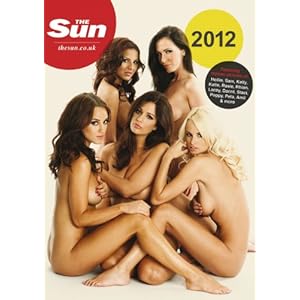


 - which then gets modified so babies can tolerate it. Now most babies are fed this way after the first few weeks, and the women who want to give their own milk often struggle to find someone to help if they have a problem. Some who want to give their own milk use a large apron called a nursing cover to ensure they are "modest". Others suggest mums should express their milk and feed back via the plastic copy breast so as to ensure not a flash of breast is seen.