- Baby rice with your baby's usual milk
- Sweet vegetables like carrot, carrots, swede, parsnips, sweet potato & butternut squash
- Savoury vegetables like cabbage
- Fruits
- White meat/fish/green veg
- Red meat
 These recommendations have been around since the norm was to introduce solids from as early as 10 weeks (more on this in a moment). Initially parents were advised to give baby rice due to its low allergenic properties, moving onto fruit and veg months 4-5, fish and white meats from 6 months and finally red meat around 7 months.
It was believed the immature gut needed time to get used to digesting foods and anything rich like meat could pose a strain.
They were wrong
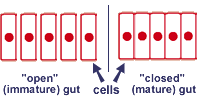 |
| Image Kellymom.com |
From six months ish some babies may also begin to need more nutritionally, zinc, iron or B vitamins - but a lot depends on the individual circumstances surrounding birth. Lower birth weight infants may need iron earlier as studies show infants born below 6 1/2 lb have smaller stores; similarly modern practises such as early cord cutting or cesarean sections have also been linked with reduced iron levels due to baby not receiving their cord blood.
So potentially we have parents waiting until six months (as per the guidelines) and then introducing baby rice which is pretty nutritionally pants.
This is then followed by veg and fruit, which as Dr Carlos Gonzalez highlights in his book "My child won't eat" offers little nutritionally to someone with a small stomach. He says:
"In the early 1900s, vegetables as well as fruits were introduced very late in children's diets; perhaps at two or three years of age and with great caution. Since they were breastfed, children were fine without them because human milk provided all the necessary vitamins. When artificial feeding started becoming more widespread, babies started becoming deficient in some vitamins (due to the fact that it took manufacturers decades to add all the necessary vitamins to artificial baby milk). This made it necessary to introduce fruits and vegetables much earlier. But there was a problem: their low calorific density. Children have smaller stomachs. They need concentrated foods, high in calories but low in volume.He then goes on to explain that mother's milk has 70 Kcal per 100g, chicken has 186, chickpeas have 150. Yet apples have only 52, carrots 27 and cabbage 15 (assuming they're drained well or nutritional content further reduces).
He continues:
"If left alone small children seldom refuse vegetables. It is not a matter of taste. Usually they will gladly accept a few bites of vegetables rich in vitamin and minerals. But only a few bites. Some mothers try to give them a plateful of these "healthy" foods."
Furthermore, nothing biologically tallies with this man made introduction plan.
Babies produce enzymes and digestive juices that work effectively on proteins and fats, however the pancreatic enzyme amylase necessary for the digestion of starches - whilst produced in larger amounts from around 6 months, can take up to 2 years to reach mature levels. Furthermore carbohydrate enzymes maltase, isomaltase and sucrase, do not reach adequate levels until around 7 months. Breastmilk does contain amylase to assist digestion, but it rather makes a mockery of the traditional "weaning plan".
Judy Hopkinson, Ph.D., Associate Professor of Pediatrics at Baylor College of Medicine and member of LLLI's Health Advisory Council states:
There is also a small study from Sweden which indicates that infants given substantial amounts of cereal, may have lower concentrations of zinc and reduced calcium absorption (Persson 1998).It is important to remember, that when solid foods are introduced, the amount of breast milk a baby consumes decreases. If protein, zinc, or other nutrients are not provided in solid foods, the amount a baby receives from breast milk could be insufficient for optimal growth during the weaning period. Therefore, adding meat to the diet early in the weaning period may be beneficial.
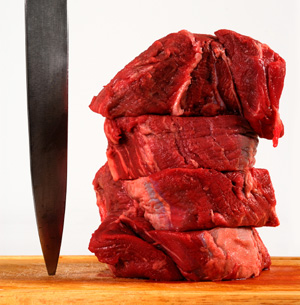
A study by Dr. Nancy Krebs found both protein and zinc levels were higher in the diets of the infants who received meat, and they grew at a slightly faster rate. Dr. Krebs' suggests that inadequate protein or zinc from complementary foods may limit the growth of some breastfed infants during the weaning period. (Krebs 1998).
Meat is also an excellent source of heme iron, which is better absorbed than iron from plant sources. The protein in meat also helps the baby more easily absorb the iron from other foods. A couple of studies looking at iron status of breastfed infants receiving meat as a first food, found higher levels of hemoglobin circulating in the blood stream. (Makrides 1998; Engelmann 1998)
Many people think the "order of introduction charts" are evidence based. Not so!
Rachel Brandeis, a spokeswoman for the American Dietetic Association said:
"Most parents are told to start rice cereal at 6 months, then slowly progress to simple vegetables, mild fruits and finally pasta and meat. Ethnic foods and spices are mostly ignored by the guidelines; cinnamon and avocados are about as exotic as it gets, and parents are warned off potential allergens such as nuts and seafood for at least a year.
Yet experts say children over 6 months can handle most anything, with a few caveats."Dr. Jatinder Bhatia, a member of the American Academy of Pediatrics' nutrition committee says:
"The difference is cultural, not scientific, the American approach suffers from a Western bias that fails to reflect the nation's ethnic diversity."In a review of the research, Nancy Butte, a pediatrics professor at Baylor College of Medicine, found that many strongly held assumptions such as the need to offer foods in a particular order or to delay allergenic foods have little scientific basis:
Take rice cereal, for example. Under conventional American wisdom, it's the best first food. But iron-rich meat, often one of the last foods American parents introduce would be a better choice.Dr. David Ludwig of Children's Hospital Boston, a specialist in paediatric nutrition says:
Some studies suggest rice and other highly processed grain cereals actually could be among the worst foods for infants. These foods are in a certain sense no different from adding sugar to formula. They digest very rapidly in the body into sugar, raising blood sugar and insulin levels and could contribute to later health problems, including obesity.Yet how often do we see toast, sandwiches, pasta, wraps, crumpets etc featuring as ideal first foods? Some diets are so grain heavy they include cereal for breakfast, sandwich for lunch and pasta for dinner.
What about if I'm vegetarian?
From LLL:
Vegetarian mothers are almost always aware of their need for protein, iron, zinc, calcium and vitamin B12 as well as adequate calories. Those who occasionally add poultry or fish to their diets and those who are lacto-ovo vegetarians, using milk and eggs in their diets, usually have no problems meeting their needs for these nutrients. For vegans, who do not use any dairy products, attention needs to be given to adequate sources of calcium. There are also many non-animal foods that provide iron, calcium, and zinc. Vegetarians may need supplements to get enough B12. Vegetarians who want their children to eat as they do will need to be aware of the same nutrient needs for their children. When starting solids, single foods are given so that any sensitivities or allergies can be noted.Ultimately regardless of whether you are omnivore, vegetarian or vegan, it seems to make most sense to offer more than baby rice or squished carrot if weaning around the middle of the first year.
Whilst we are on the subject - one of my pet hates, Baby yoghurts!
Teeny pots of sugar laden junk. The leading UK brand Petits Filous has a staggering 11.9g total sugar per 100g. A tiny proportion of this is lactose (the naturally occurring milk sugar) - however they add to that 6.9% sugar, 5% fruit puree AND 3.9% fructose. Why?
If we consider the maximum daily intake for a toddler is around this mark, a 50g pot is supplying half. Babies have a smaller allowance, and are also getting sugars via their breastmilk and formula. All it's doing is giving baby a taste for excessively sweet products, and both sugar and fructose are heavily implicated in the obesity epidemic.
The healthiest option is to simply buy natural live yoghurt. Whilst adults are often used to sugar laden products, infants weaned onto plain natural yogurt like it just as much and may actually wince when they receive a sugar hit version! We seem to think things need sweetening and fruit adding for babies and children, some say their baby doesn't like plain yoghurt because they don't consume lots immediately (like they may be tempted to do with sugar filled Filous), but it can take over ten tastes for a baby to like many foods and ultimately we don't sprinkle broccoli in sugar to increase its appeal? If you really need to sweeten it fruit should be sweet enough alone, without added fructose?
If we want our child to develop healthy eating habits, which ultimately I'm sure many do - the relationship we develop with food during infancy surely matters?
Updated Jan 2015
Related Post:


Yes, the baby/child yoghurt thing drives me nuts, too. Might as well give them a doughnut! Rachel's is the only one I've found without sugar, too. There used to be two others (one was called Mums4 and there was another organic one but I can't remember the name.) BTW, my philosophy with baby rice (or anything I feed my children) is that if I find it disgusting and wouldn't eat it, neither should they.
ReplyDeletePlum Baby is the only other one I've found, but that's getting harder to find.
DeleteFunny, i stopped buying fromage frais for my children a few months ago after a friend said they were full of added rubbish!
ReplyDeleteIve never seen those yoghurt's, i shall keep an eye out for them!
You just need to read the ingredients on anything that is packaged.
DeleteYou just need to read the ingredients on anything that is packaged.
DeleteThank you AA,as with many first time mums I have found the whole weaning issue a minefield and this has given me lots to think about. One thing is for sure I don't want to give my lo baby rice just to make life easier for me as it seems alot of my peers are doing as their ff babies 'need' it at 12wks because they are waking up hungry.
ReplyDeleteMy issue with the 'scheduling' of introducing solid foods is how pseudo-scientific and complex it makes the whole business. I can't help but feel that this helps the commercial baby food manufacturers peddle their products. If infant feeding is considered a totally different process to feeding an adult, then it is so much easier to sell parents' products which they don't actually need.
ReplyDeletePS I really enjoy your blog, but have been saddened by how many commercial concerns seem to be creeping in... Why not just promote yogurt with fruit? The disclaimer that you're not involved with the company is a bit of a cop out.
Hi Amy
ReplyDeleteAbsolutely re helping the commercial baby food manufacturers :)
I'm a bit confused by what you mean about how many commercial concerns seem to be creeping in? The reason I mentioned the brand of yoghuts was because literally it was the only brand I could find without added sugar! Some parents will use natural yoghurt and fruit, absolutely - which was why I mentioned this first. For those who want to grab a fruit yogurt, I felt the flipside to showing which contained loads of crap, was suggesting an alternative for people who wanted to buy a ready to eat one that was free of junk.
I don't see how pointing out I benefit in no way financially or otherwise from Rachel's dairy is a cop out? it's making it clear my views are my own and not influenced by payment.
AA
What about what the baby wants?
ReplyDeleteI have a (now 5 month old) who I started to wean at 3 1/2 months. He is extremely advanced for his age, he held his own head up from 1 week old... He absolutely loves his food. At just 4 months he got mad if you helped him to eat, he drank water from a beaker himself and would get grumpy until you gave him something!
He now happily bites down on banana, rusks etc.
I'm a first time mum and it makes me almost depressed with worry that I am doing the wrong thing because you HAVE to wait till 6 months... What about advise for the early weaners?
I do believe that EVERY baby is different.
I also have been advised by a medical professional that this 6 month malarkey is in order to try and reduce obesity in babies.. Any truth there perhaps?
Thanks for this, very useful! I've used just plain full fat yoghurt or greek yoghurt with my now 3 3/4 year old and she still prefers it to the sugary variety. We've also used spelt porridge - this is widely used in Germany and I actually imported it. It's low in allergens and it tastes just great. Not sure about its other nutritional value, but it definitely was our favourite taste wise.
ReplyDeleteAs I'm a vegetarian, I did wonder though how to deal with the advice not to introduce lentils and other pulses until 8 months as they are not so easy to digest. We introduced them earlier, to make up for the lack of red meat in our diet. We used small quantities in a pureed form (and lots of dried apricots cooked with apple and pear).
I like to look at home things happened before the 1st world industrialization happened, so I recognized how much malarky it was to do the whole weaning schedule. When my kids were ready to start solids they started eating whatever was cooked for the family. Pepper beef stew (spices and all), eggs, fruit, normal cereal, if it was on my plate or bowl it was probably going into their mouth. Neither of my kids has ever had 'baby food', if something was too hard to gum it got smashed, pre-chewed, or given in a piece too big to swallow just to taste and suck on. My baby loved chewing on the turkey legbone this last Thanksgiving
ReplyDeleteOOh - thanks for this great post! I wanted to share that Dr. Nancy Krebs is doing another study that I'm hoping will be released soon, not sure when. I only know this because I participated in it. My son was baby #45 of 47 in March 2010. It was another study on zinc absorption, comparing traditional fortified cereals, organic non-fortified cereals and meat.
ReplyDeleteTo me it's interesting to see the different ways my two kids eat because I never gave cereal or baby food to my oldest, he just got whatever we got, and I didn't do the one food per week thing because I didn't know I was "supposed to." With my second, the one in the study, we were assigned the organic non-fortified cereal group so we fed him quite differently that I would have naturally done. They are both good eaters now, but they really prefer different things. Interesting.
We went down the 'baby led weaning' route, and offered no baby rice, no purees, no spoon feeding. I think this was one of the better decisions I made as a parent. It was stress free and a lot cheaper than buying in lots of specially made baby food.
ReplyDelete@ Anon - I think 3 1/2 months is far, far too early. But perhaps it´s because I come from a country where babies are not started on solids until they are around 5 months of age. I think at less than 4 months the baby´s stomach is not mature enough to cope with anything other than milk. I don´t care what some HP´s say about it, they should not give they´re own opinions but stick to the facts and then let you make your choice. It´s really unprofessional to do otherwise. I am an HP myself and, although I find it hard sometimes to talk about some recommendations I might not agree with (and that I would do differently), I still have got to stick to the current recommendations. I don´t think you should worry, though as your baby is probably ok (you probably would know if he wasn´t).
ReplyDeleteAs a nutritional therapist I always say the same thing - do not feed your child/ren food marketed as being for children. At the very least it is a rip off, and at the worst the ingredients are poorest quality, rejected for 'adult' foods, because they will be sweetened, flavoured, mashed, coloured etc and so disguised. Sadly most parents believe the ingredients in 'foods' aimed at children are *better* quality, not so :-(
ReplyDeleteWOW is all i can say And thank you this explains soo much about my daughter's infancy. SHe had sever excema and allergies. I eleminatned wheat milk and soy as being they are the top allergens. But when it came time to wean her her allergies got soo bad. I followed teh weaning schedule suggested buy her Pediatrician, she was still a miserable baby and getting sick more often now. So we saw an allergist reccomaned teh same schedule and a nutritionist they all reccomend the same thing with very little variation. but she hated teh rice cereal, loathed the friuts and would only eat veggies if they were the same ones the rest of the family ate. Since teh nutritionist said table food in baby sizes was ok we did the veggies. But she lost weight was diagnosed with failure to thrive and was self limiting her diet. At 1 yer old we introduced meats and rice pasts. she loved it and suddenly she began gaining weight. In 2 weeks she put on over 2 pounds.
ReplyDeleteFound out she was intolerant of most fruits due to high acid contenct and had a wheat gluten allergy which was why she couldn't take any of the suggested cereals and as for the rice cereal she just hates the taste LOl.
I now realize she was self limitng due to allergies and her intolerances. And also apparently her little tummy was just not ready for the suggested weaning shcedule.
Thx for your info.
For my new little one I now know better. :)