So I blogged back in July about Kangaroo Mother Care, and it seems on this front things are really hotting up! A story hit the media last week that finally got the world's attention; a baby born at 27 weeks, was declared dead after doctors spent 20 minutes unsuccessfully battling to get him to breathe. with no vital signs, they broke the news and mum asked to say goodbye to her baby. Two hours of kangaroo mother care (KMC) later, he began to breathe. His mother (luckily) followed her instincts and gave him some colostrum on her finger - he took it and his breathing became regular...
Whilst this is a lovely heart warming story, it inevitably makes you wonder - how many prematures pronounced as stillborn, got two hours of skin to skin? how many prematures are rushed away from their mothers under the false belief artificial high powered technology can do a better job? Even when Jamie began to breathe, doctors dismissed this as a reflex action - how many other infants have done this and it's been dismissed as a reflex? As someone on an internet list pointed out, perhaps its fortunate for this baby that those early signs were dismissed as a reflex, as he may not have survived further resus. I for one find this terrifying!
My own son was only 6 weeks early, had agpars of 9/10 and yet was rushed with urgency to the SCBU where they immediately wanted to supplement with artificial breastmilk substitute and put him under a heated cot. When I declined the panic was tangible, but this is what we do?!? ok well on your head be it! I endured 13 days of sheer hell for daring to defy, question, seek alternative advice (for which I still owe Annalisa and Nils so much!) and decision make myself. Change from this norm will NOT come easily.
Whilst some are stunned by this story, Nils Bergman has hardly batted an eye:
This is an emotive story, but hardly original!
Unusual, but occurs ... actually right here in Cape Town just two weeks ago !
Susan Ludington-Hoe opens one of her books on Kangaroo Care with a similar anecdote.
Nils Bergman
To almost all newborn mammals, separation from mother is life-threatening. This activates a very powerful defence response, which is to shut down and immobiliseHe hypothesises that because the nervous system of prematures is so immature, if there is stress during delivery the only way their body can cope is to "shut down" to survive.
It is "skin-to-skin contact" which is the key, because the deep sensory fibres from the skin go to the "emotional processing unit" of the brain (amygdala), and tells the brain "you are safe". This de-activates the dissociation (un-safe mode), and restores the regulation (safe mode) - which is the real function of the vagal nerve.
Nils Bergman
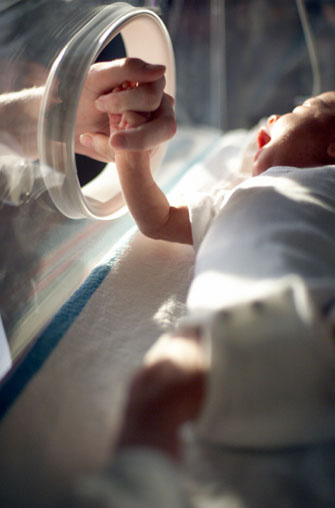
 So why then are we still taking babies away from their mothers and putting them in an artificial womb like environment? As I mentioned before, not a single study has shown adverse outcome with KMC - yet women still have to endure being separated from their babies, why? I wonder if the decision makers have ever taken a call from the mum of a premature infant, desperately trying to produce enough breastmilk in an environment so removed from normal, she may struggle even to express enough for a small feed. To hear her sob she has never even held her baby, she's only allowed to stroke a finger through a hole in the side of his incubator. We sometimes forget that incubators are as artificial to a mother as they are to baby; she may be in shock her baby has come early, may feel grief for the end of her pregnancy and then has her baby taken from her.
 These mothers are extremely vulnerable during what can be a traumatic experience, and as it stands women cannot even sleep on the same ward as their baby! In our SCBU & NICU unit (which were together) there was around 26 cots and 6 mother's rooms. Many are discharged home without their infant (yes really whilst supposedly trying to establish breastfeeding!) and end up in a frantic pattern of trying to express enough, get milk to the ward in time, sterilise everything required and then visit their baby - which of course is made a whole lot more interesting if you already have another child or few at home!
So many people fund raise for SCBU, yet I only ever hear about the next 15k required for a snazzy incubator. I know if people feel that saved their baby, they feel they are doing the right thing in helping others to also have access to technology; but just think what a profound difference this money could make if it was spent keeping babies and mothers together - not only in terms of health outcome in the short term, but breastfeeding rates would soar! there would be a real longterm gain.
Perhaps we need a campaign to provoke change? Anyone feel strongly enough to hop on board and help organise something? If so email me!